Refugee Week 2026: A Million Stories and Counting
Refugee Week 2026: A Million Stories and Counting
Article by Rosa Nobarani (Rosa Maghsoodi Nobarani), Principal Solicitor of Zest Legal and Founder of Resettlement Australia
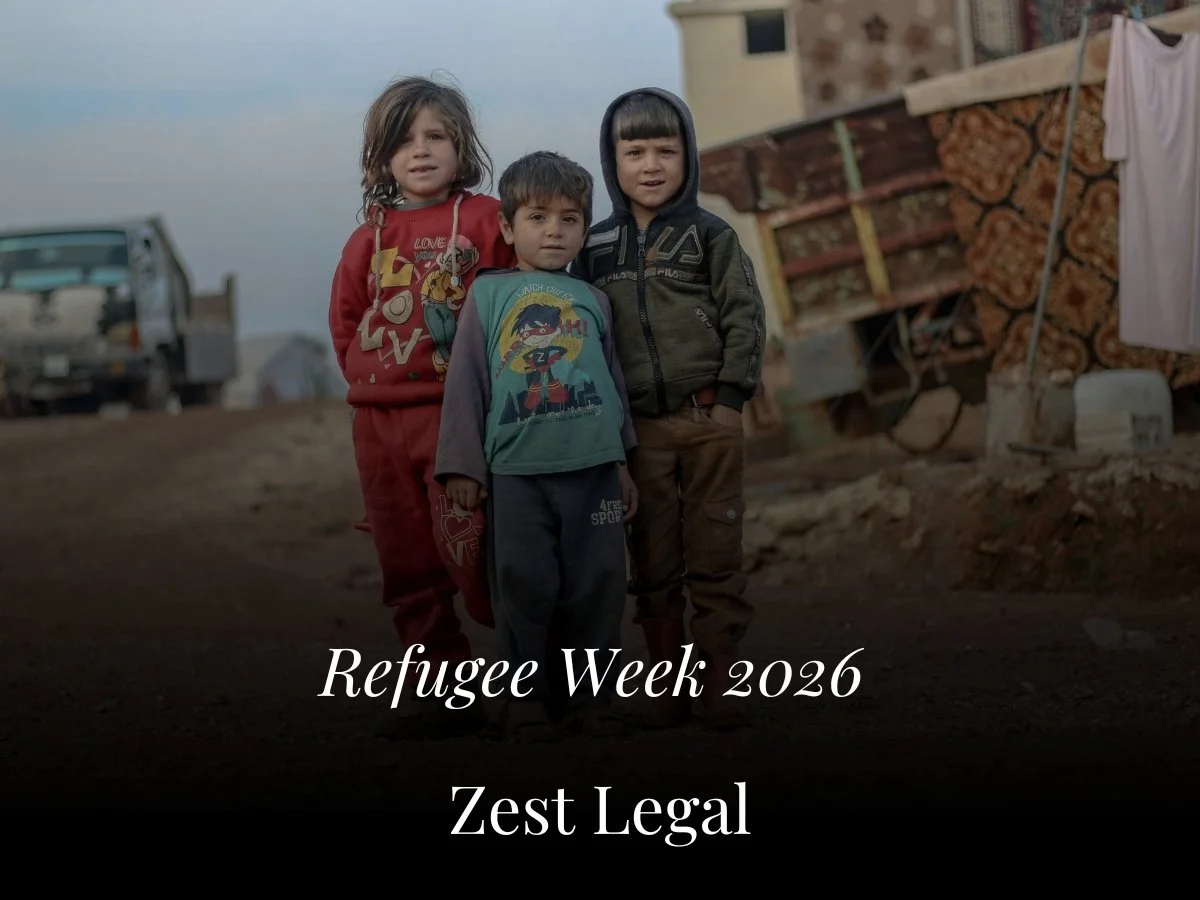
This week, Australia pauses to reflect on something remarkable.
Since 1947, this country has welcomed one million people through its humanitarian program. One million people who arrived with courage, resilience, and hope, and who have gone on to shape the Australia we all share today.
Refugee Week 2026, running from 14 to 20 June 2026, takes that milestone as its theme: A Million Stories. Each story unique. Each one powerful. And together, they form something far greater than any single number can capture.
I have been thinking about what that means, not just as an Australian immigration lawyer, but as someone whose own family story is woven into that tapestry.
A Personal Connection
My family first came to Australia from Iran. Like so many migrants who have made there journey to Australia, they carried with them everything that mattered: their values, their culture, and their hope for something better. Growing up with that influence shaped how I see the world and ultimately, how I chose to practise law. Long before I became an immigration lawyer, I was involved in volunteer and advocacy work supporting migrants and members of the Iranian community navigating a system that can feel overwhelming when you are new to a country, when English is not your first language, and when the stakes could not be higher.
When I eventually became a lawyer, that foundation never left me. I have sat across the table from people fleeing persecution, conflict, and fear. I have worked on visa applications and humanitarian matters where the outcome meant the difference between safety and return to danger. I have seen what it truly means to someone when the law works in their favour. That is why I do this work.
Refugee Week 2026: A Million Stories
Australia's humanitarian story began in 1947, when the nation welcomed 4,000 refugees from Central Europe as the world emerged from the devastation of the Second World War. What started as a commitment to offer safety to those displaced by conflict has, over the decades, grown into one million people finding a new home through Australia's humanitarian program.
One million people. One million journeys. One million stories of courage, resilience and hope.
This year's Refugee Week invites us not only to celebrate that milestone, but to reflect on what it represents. It asks us to consider the kind of country we want to be, how we continue to support those seeking safety, and what role each of us can play in helping people feel welcomed, valued and that they truly belong.
For me, these are not abstract questions. They are questions at the heart of the work I do every day.
No Refugee Chooses to Leave
While the Second World War ended more than eighty years ago, displacement and humanitarian crisis have not. Across the world, people continue to be forced from their homes by conflict, persecution, political instability, and human rights abuses. Every year, families make impossible decisions in the hope of finding safety for themselves and their children. No refugee chooses to leave.
When I reflect on the people I have had the privilege of working with over the course of my career from Iran, Afghanistan, Myanmar, Lebanon, Sudan, the Democratic Republic of the Congo, Syria, and many other parts of the world I am reminded of a simple but confronting reality. The difference between many of us and a refugee is often nothing more than the geographical luck of where we happened to be born. Different countries. Different cultures. Different circumstances. But a common desire for safety, dignity, and the chance to rebuild. They did not leave because they wanted a fresh start somewhere new. They left because the place they called home was no longer safe. Some were targeted for speaking out against a government. Some were prevented from practising their faith. Some faced violence simply because of who they are and who they love. Others watched conflict consume everything around them and were forced to make an impossible choice. We do not choose where we are born, the government that governs us, or the circumstances we inherit. Yet those factors can shape the entire course of a life.
Refugee Week is an opportunity to recognise that behind every humanitarian visa application, every protection claim, and every resettlement journey is a person whose life might have unfolded very differently had they simply been born somewhere else. It is a reminder that compassion, dignity, and access to justice matter because none of us can take our circumstances for granted.
Resettlement Australia: Access to Justice for Those Who Need It Most
In 2023, alongside founding Zest Legal, I established Resettlement Australia as the pro bono and humanitarian initiative of the firm. The reason is straightforward: the people who most need legal help are often the people least able to access it. Refugees, asylum seekers and vulnerable migrants often face significant barriers, whether financial, linguistic or cultural, that can prevent them from accessing quality legal assistance when they need it most. Resettlement Australia exists to help close that gap. It reflects a belief I hold deeply: access to justice is not a privilege. It is something every person deserves, regardless of where they were born or how they arrived.
Through Resettlement Australia, we provide free legal assistance to refugees, asylum seekers, and vulnerable migrants because behind every migration journey is a human story that deserves to be heard, treated with dignity, and given a fair chance. If you or someone you know may benefit from pro bono immigration legal assistance, you can learn more at resettlement.au.
What Refugee Week Means to the Legal Community
For lawyers working in migration and humanitarian law, Refugee Week is a moment to reconnect with why this work matters beyond legislation, forms, and deadlines. It is easy, in the day-to-day demands of legal practice, to lose sight of what is actually at stake in every file on your desk. Behind every humanitarian visa application is a person who has fled circumstances most of us will never experience. Behind every family reunification matter is a family separated by forces beyond their control, counting the days until they can be together again. The law can be a powerful tool for dignity, safety, and justice. But it only works that way when people can access it and when the lawyers who practise it remember that their clients are human beings first. That is the spirit of Refugee Week. And it is the spirit that guides the work we do at Zest Legal and through Resettlement Australia.
How You Can Get Involved
Refugee Week events are taking place across Australia from 14 to 20 June 2026. Whether you attend an event, share a story, support a local refugee organisation, volunteer your time, or simply take a moment to learn more about the refugee experience, there are many meaningful ways to participate. World Refugee Day falls on 20 June and is observed around the world to honour people who have been forced to flee and to champion their right to seek safety and rebuild their lives. You can find events near you and explore ways to get involved at refugeeweek.org.au and through the Refugee Council of Australia.
Australia's humanitarian story is not finished. It is being written right now in migration offices, courtrooms, community centres, and family homes across the country. Every person welcomed. Every protection visa granted. Every family reunited. Every vulnerable person able to access legal help when they need it most. These moments may seem small in isolation. Together, they tell the story of a nation that continues to offer safety, opportunity, and hope of the people who make that possible. This Refugee Week, I am proud to be part of that story. And I am grateful, every day, for the work that allows me to play a small role in helping others write theirs.
Rosa Nobarani (Rosa Maghsoodi Nobarani) is the Principal Solicitor of Zest Legal and founder of Resettlement Australia, the pro bono initiative of Zest Legal. Rosa is an Australian immigration lawyer advising clients across partner visas, employer sponsored visas (Subclass 482 and 186), protection visas, humanitarian matters, citizenship, and Administrative Review Tribunal appeals.